News
Stay tuned for the latest news of events, product release, features, updates, tips and more.



Date: 2026-07-27 2851
Would BIM replace CAD in construction and building design?
Would cloud platforms replace desktop applications?
Would artificial intelligence replace manual design work?
For over a decade, the future of engineering software has been framed as a series of replacements. Yet the reality inside engineering departments look very different. CAD remains one of the most widely used engineering technologies across Europe — spanning machine builders and product designers in Germany and electrical and industrial contractors in France, and infrastructure and manufacturing projects across Central Europe. USP Research1 confirms this persistence: in mature markets such as Germany, approximately 95% of architects continue to use CAD software even as BIM adoption expands.
The reason is straightforward. CAD sits at the beginning of the engineering value chain — where ideas become technical specifications, and where design decisions continue to influence manufacturing, construction and maintenance. The question today is not whether CAD will survive. It is how CAD is evolving into something far more powerful: the foundation of intelligent engineering workflows that connect design, collaboration, BIM, cloud services and AI.
The assumption that BIM will replace CAD misunderstands how engineering organizations actually operate. Engineering work still relies heavily on drawings, technical documentation and standardized deliverables — particularly in Germany’s industrial sectors, where mechanical engineering companies generate large volumes of detailed technical drawings and infrastructure operators maintain extensive DWG archives accumulated over decades.
These assets represent years of embedded expertise: drawing standards, design libraries, automation scripts and accumulated engineering knowledge. The challenge is not replacing them but extending their value. Digital transformation in engineering is therefore increasingly about continuity rather than disruption — connecting existing CAD environments with BIM processes, cloud platforms and AI capabilities rather than abandoning them.
Historically, CAD software was evaluated primarily on drafting capabilities — command sets, drawing performance and file compatibility. Today the criteria are broader. Engineering organizations expect CAD systems to support collaboration across disciplines, integrate with manufacturing, simulation, PLM, project management and engineering data management systems, enable cloud-based information sharing and deliver intelligent assistance throughout the project lifecycle.
In other words, CAD is evolving from a standalone application into a digital engineering platform. A drawing generated during design may later influence procurement, manufacturing, commissioning and facility management. The value of CAD therefore lies not only in creating geometry but in managing engineering information across its entire life.
This shift in expectations is driving the next generation of CAD product architecture — one that connects drafting precision with BIM, cloud collaboration and AI capabilities within a unified environment.
Gstarsoft's approach to product development reflects this shift directly. Rather than maintaining CAD as an isolated drafting environment, the company has built GstarCAD as a platform core — one designed from the outset to connect with BIM workflows, cloud collaboration services and AI capabilities. The logic is pragmatic: organizations should not have to choose between preserving their existing engineering assets and adopting new technologies.
Perhaps no topic generates more discussion in Europe’s construction sector than BIM. Governments promote adoption, public procurement increasingly requires digital delivery, and OpenBIM initiatives continue to gain momentum.
Yet adoption remains uneven. Many organizations — especially SMEs, which represent a significant portion of Europe’s engineering landscape — still operate in hybrid environments where CAD and BIM coexist. Training costs, workflow disruption and software complexity create real barriers. The market response is increasingly one of integration rather than replacement: connecting CAD and BIM through shared workflows, allowing engineers to maintain DWG-based processes while gradually introducing model-based collaboration and lifecycle information management.
In this framing, CAD becomes the entry point into digital construction rather than an obstacle to it — a bridge that makes BIM adoption more accessible rather than a system to be discarded.
Regional realities shape how organizations engage with CAD. According to the European Investment Bank’s Digitalisation in Europe 2024 report2, digital transformation is a strategic priority across European industry, though investment constraints remain significant among SMEs. Engineering firms must simultaneously manage decades of legacy DWG data, respond to BIM mandates, and navigate sustainability regulations.
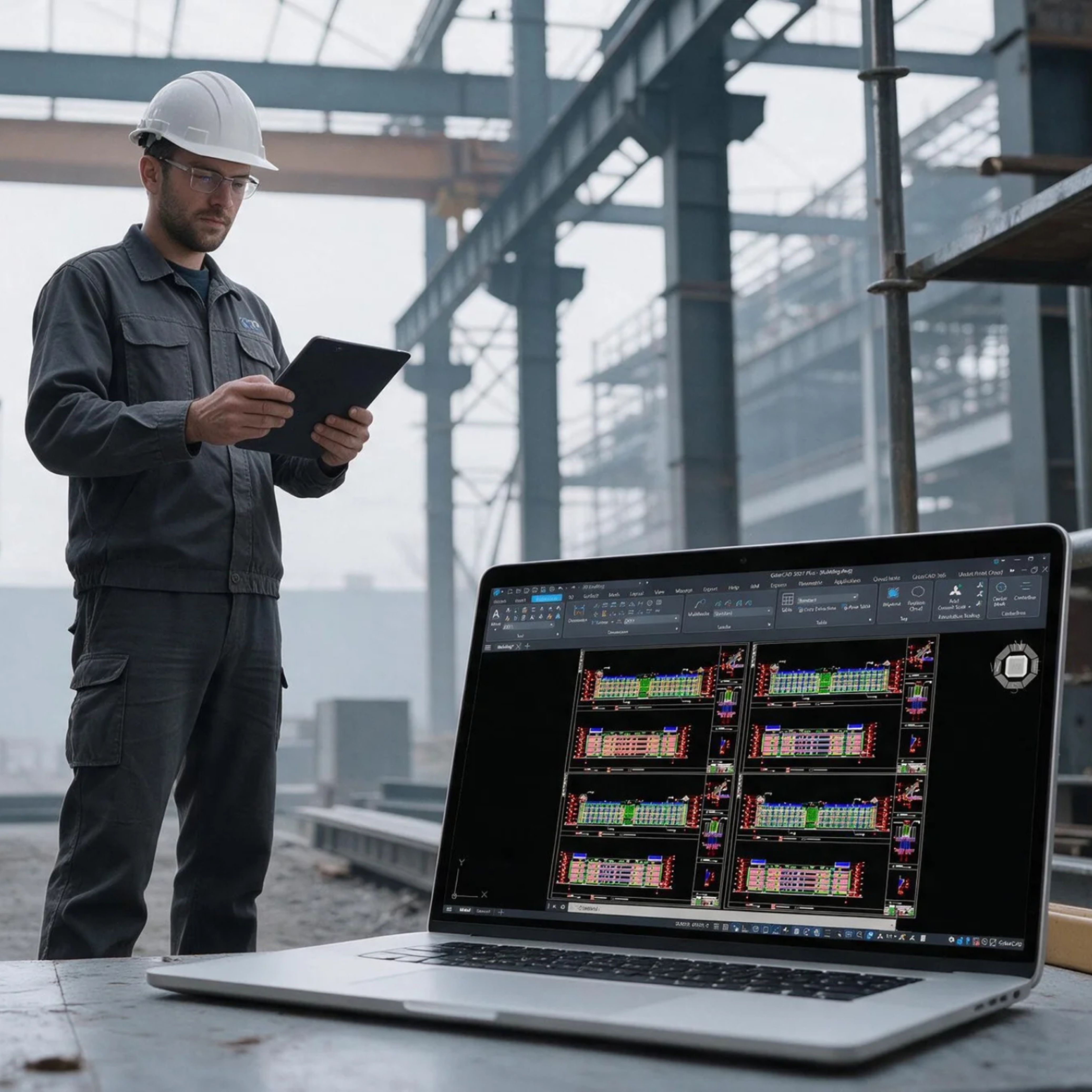
A Polish structural engineering contractor working on large steel construction projects identified operational agility as a critical requirement. The company needed lightweight software capable of handling large engineering drawings while maintaining seamless DWG compatibility across architects, engineers and subcontractors. Performance, interoperability and predictable long-term costs proved just as important as functionality itself.
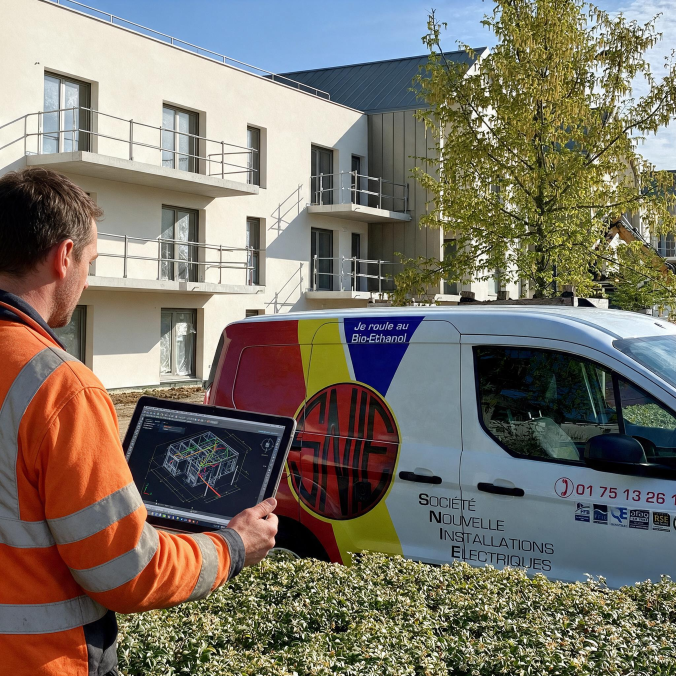
In France, an electrical engineering company faced a different challenge. Its primary concern was not design capability but rising software costs and increasingly restrictive licensing models. The organization ultimately prioritized deployment flexibility, performance and long-term cost predictability when evaluating alternative CAD platforms.
Across Asia, a somewhat different pattern is emerging. Many engineering firms are increasingly focused on transforming CAD into a productivity platform. Automation through LISP development, workflow customization, AI-assisted scripting and field-based engineering applications are becoming central priorities. Organizations are looking for ways to automate repetitive processes, capture engineering knowledge and connect design activities with operational workflows.
Despite different starting points, both regions are converging toward the same objective: integrated, intelligent workflows that reduce friction across the entire engineering lifecycle.
Artificial intelligence has rapidly become one of the most discussed topics in industrial software. The challenge is separating genuine engineering value from marketing hype. Unlike consumer applications, engineering environments demand reliability, traceability and precision. A mistake in a drawing is not merely inconvenient — it can affect safety, compliance, manufacturing quality and project costs.
This is why the most promising AI applications in engineering are not focused on replacing designers. They are focused on augmenting them. Several practical applications are already in use: automated drawing recognition and vectorization, intelligent extraction of engineering information, design rule verification, automated documentation and workflow support. AI-powered rendering is also changing how design decisions are communicated, allowing engineers and stakeholders to evaluate concepts earlier and more effectively.
The next step may be more significant still. By combining large language models, domain-specific engineering knowledge and CAD-native algorithms, future systems could become capable of understanding both engineering intent and engineering data — evolving from passive tools into intelligent assistants embedded within everyday workflows.
These are not distant possibilities. Natural-language interaction, legacy drawing conversion and AI-assisted visualization are already entering production CAD environments — evidence that AI’s role in engineering is moving from experiment to infrastructure.
Cloud technology is transforming engineering collaboration in much the same way that BIM transformed project coordination. Historically, engineering teams exchanged files. Today, they increasingly exchange information. File-based workflows create duplication, version conflicts and communication delays. Cloud-native platforms address these challenges by creating shared environments where drawings, comments, revisions and project data remain continuously accessible.
The value extends beyond remote access. Cloud platforms establish continuity between design, review, approval and operation phases. They also create the foundation for digital twins, lifecycle information management and future AI applications. In this sense, cloud technology is not simply an IT deployment model — it is becoming a fundamental component of modern engineering workflows.
Engineering software can no longer
operate in isolation. Modern projects — whether in
construction, manufacturing or infrastructure — involve complex technology environments
that include CAD, BIM, PLM, ERP, simulation platforms and asset management
systems. No single application can solve every problem.
Recent guidance from buildingSMART International3 highlights interoperability, data continuity and open standards as essential foundations for digital construction, emphasizing that openBIM enables collaboration across software environments while preserving long-term usability of engineering data.
Organizations increasingly expect information to move freely across software boundaries. The value of a platform is no longer measured solely by what it can do internally — it is also measured by how effectively it connects with the broader engineering ecosystem. The winners of the next decade are therefore unlikely to be closed software environments. They will be platforms capable of enabling collaboration across diverse technologies and disciplines, built on OpenBIM, IFC standards, open APIs and developer ecosystems.
Industrial software is entering a new phase. The traditional boundaries between CAD, BIM, cloud collaboration and AI are converging into connected engineering environments capable of supporting the entire lifecycle of engineering information — from initial design through manufacturing, construction and long-term operation.
Within this environment, CAD remains a critical foundation. Not because it resists change, but because it continues to evolve. The future of engineering belongs to integrated, intelligent and interoperable ecosystems — built upon the precision and engineering knowledge that CAD has delivered for decades.
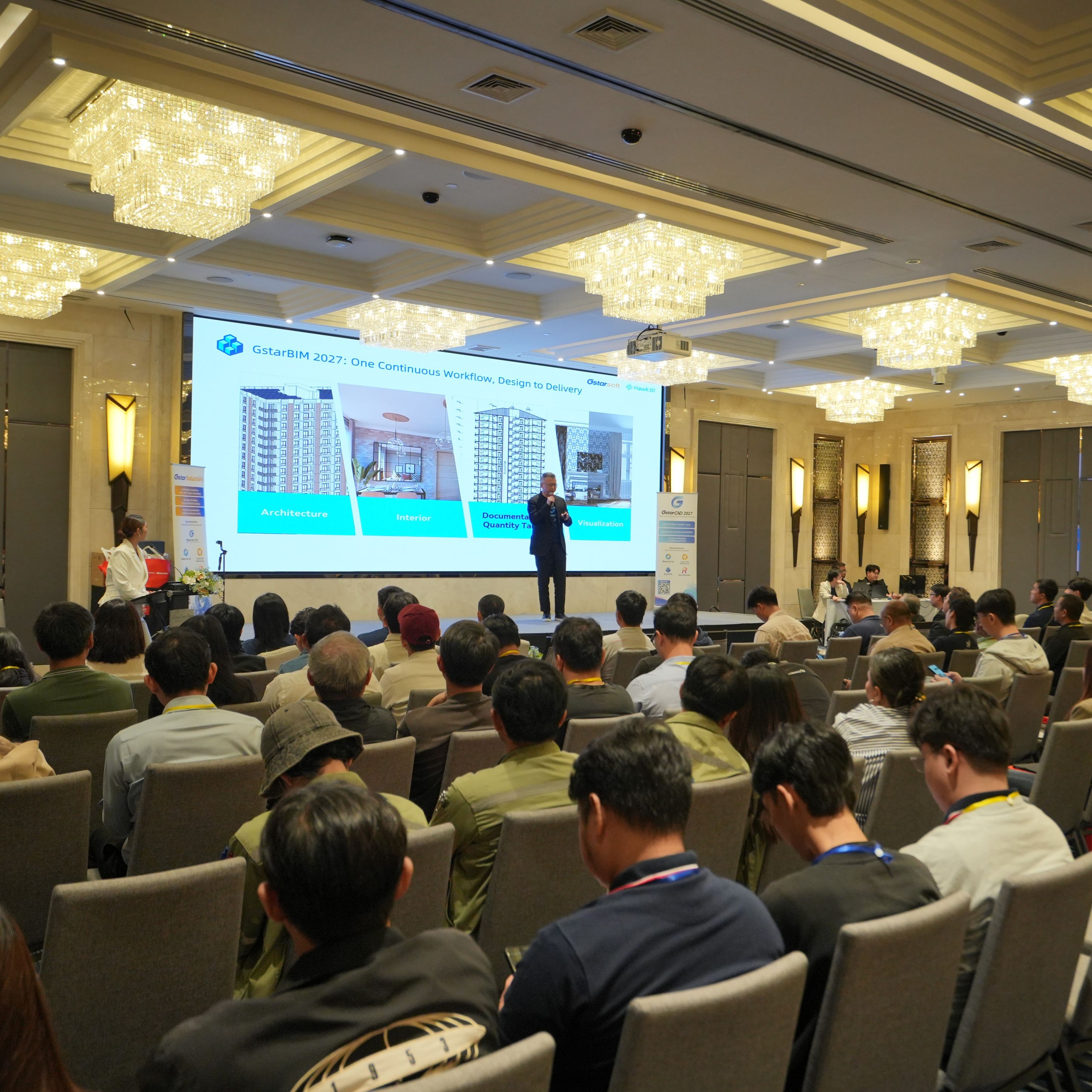
This is the direction Gstarsoft is pursuing through its latest generation of products. GstarCAD 2027 remains the core drafting platform across mechanical, electrical, architectural and infrastructure design, while GstarBIM 2027 extends that foundation into model-based workflows for organizations that need them. GstarCAD Cloud and GstarCAD 365 enable browser-based design, online review and cross-functional collaboration across industries. The AI Assistant introduces natural-language interaction into CAD workflows, AI ScanToCAD converts legacy drawings into editable DWG content, and GstarRender extends AI into visualization. Taken together, they reflect a consistent strategy: helping engineering organizations across manufacturing, infrastructure and construction alike evolve toward connected, AI-enabled workflows at their own pace — without abandoning the investments and expertise they have already built.
Sources referenced:
1.USP Research, 'BIM and CAD
Software Usage of European Architects';
2. European Investment Bank, 'Digitalisation in Europe 2024';
3. buildingSMART International, 'Construction openBIM Industry Insight'.
2026-09-21
2026-09-17

2026-08-19
2026-07-27

2026-06-17

2026-04-02

2026-01-14

2025-11-27
